
Sprite Bot Was started in a 3k discord now hosted to 140+ discords
AINotificationsSecurity
38Votes this month182Servers5(1)Rating
10 reviewed bots in this category.
Security is not moderation. Moderation governs what members are allowed to say. Security governs who gets in at all, and what happens when somebody with elevated permissions does damage, whether deliberately or because their account was taken over.
Three jobs dominate. Verification establishes that a human is behind a join, via a button, a puzzle or a confirmation on a web page. Raid protection notices when an unusual number of accounts arrive in a short window and closes the server temporarily. Anti-nuke watches high-impact actions (mass bans, deleted channels, freshly granted roles) and strips permissions from whoever is performing them before they finish.
The thresholds have to be yours. Raid protection with fixed limits is either too twitchy for your server or too slow. Twenty joins a day and two thousand joins a day call for different numbers. Check that both the window and the count are configurable, and find out exactly what happens when the threshold is crossed.
Anti-nuke needs a memory. The whole value of the feature rests on telling a routine cleanup apart from an attack. Good implementations count actions per person per window and let you exempt known bots and roles. Poor ones fire the moment somebody renames three channels.
Verification without a dead end. Every hurdle at the door costs you members. If verification requires an external website, you lose everyone on mobile who cannot be bothered to switch to a browser. A button inside the server is almost always the better trade; it stops bots without driving people away.
Recovery. After an incident, what counts is how fast the previous state returns. Some bots back up roles and channel permissions and can restore them. It is the feature nobody thinks about until they need it.
Security bots are the one category where broad permissions can genuinely be justified, and the principle still holds: only what the advertised feature actually needs.
Verification needs Manage Roles. Raid protection adds Kick Members and Moderate Members. Anti-nuke needs View Audit Log to see who did what in the first place, and Manage Roles to take permissions away from an attacker.
Anti-nuke bots in particular tend to ask for Administrator, arguing they must outrank everyone. The argument is not wrong, and it is also precisely why a compromised security bot is the worst case available. If you grant it, grant it only to a bot with a traceable origin, active maintenance, and a support server where questions get answered.
Role order matters as much as the permission list. The bot must sit above the roles it is expected to strip. Positioned below them, it will report the attack and be unable to act.
The first mistake is treating security as a one-time setup. Thresholds that fit a year ago do not fit a server that has since tripled. Review them twice a year.
The second is a single alert channel. If the alarm goes to the channel an attacker deletes first, you have no alarm. Keep a private channel that plays no part in day-to-day use.
The third is arming everything at once. Verification, raid protection and anti-nuke switched on together, without testing each in isolation, ends with nobody knowing which rule locked out whom. Bring them online one at a time.
Sprite Bot Was started in a 3k discord now hosted to 140+ discords

🔗 Easily enable or disable links sharing with warns, malware secure, costum link blacklist and more!

A Discord Pokémon card collector, Multi player dueling, and game hub, and server management bot centered on fair trade.

All-in-One AI Moderation, Live Social Feeds, Dynamic VCs & Support Suite

Stop spammers, raids, and nukes! The most powerful application for Anti-Spam, Automod, Member Verification, Anti-Raid, Logging & More! 💪🔒

Instantly copy, clone, backup Discord Servers and Messages for FREE! Try out Ditto to create backups for you servers now!
Stop alt accounts from winning your giveaways. Winner-only verification, device and network link detection, and evidence your mods can actually read.

The best discord security companion for your server, featuring anti-nsfw, ocr moderation, chess battles and more with sass and style! 💅✨

moderation, tickets, feeds, social reposts, profiles, media tools, clubs, and more for Discord servers.
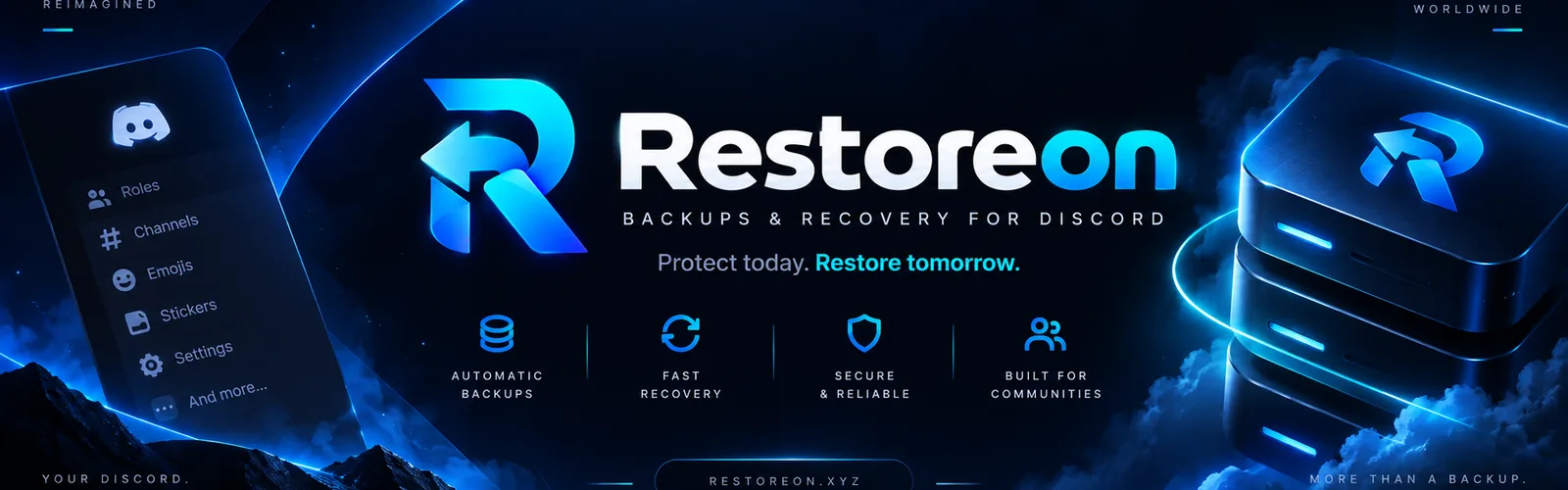
Restoreon is a Discord backup and recovery bot built to help protect your server configuration and give you a reliable way back when something goes wrong.
These bots are not listed here and not reviewed by us. Name, description and server count come from Discord's App Directory.
All-in-One security package for Discord servers, stop raids and nukes, verify users and kick bot accounts, limit moderation usages and more. Try it now: https://securitybot.gg
A bot that protects your server from any vandalism through an advanced security system, with constant updates
Protect your server with captcha verification technology!
Security is a powerful anti-nuke Discord bot designed to keep your server safe. It detects dangerous permissions, stops unauthorized actions, and auto-protects your community 24/7. Powered By AveronCloud Website - https://securitybot.averoncloud.com/dashboard Privacy Policy - https://securitybot.ave
If you need anything we love to help you out ! For more info join my server: https://discord.gg/zrnpKcYF5d